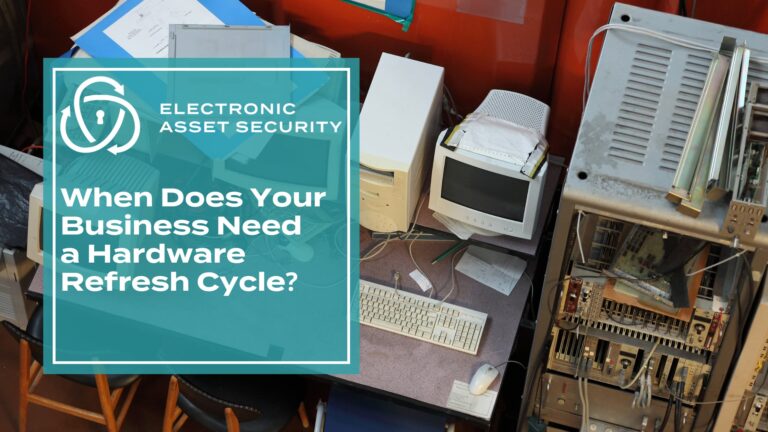
When hardware or operating systems reach end-of-support, risk increases.
A hardware refresh cycle becomes necessary when:
Security patches are no longer available
Devices cannot support modern security tools
Regulatory expectations outpace current infrastructure
Unsupported systems create long-term exposure.
3. Growth or Strategic Change
Business expansion often triggers a hardware refresh cycle:
Hiring increases
Cloud migration occurs
New enterprise software is deployed
Infrastructure needs change
In these cases, a hardware refresh cycle supports scalability rather than reacting to failure.
A Hardware Refresh Cycle Is a Business Lifecycle Event
A hardware refresh cycle represents:
Capital investment
Operational transition
Data risk exposure
Compliance consideration
Treating it as a structured lifecycle process — rather than a simple upgrade — helps organizations modernize infrastructure while maintaining clarity and control.