
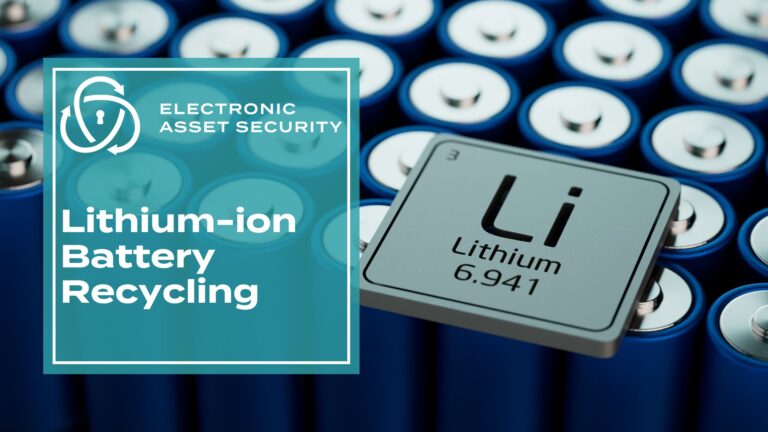
Lithium-ion batteries are found in nearly every device we depend on—laptops, Chromebooks, tablets, phones, power tools, and more. While these batteries make our technology portable and efficient, they require special handling when they reach the end of their life.
As Iowa’s only R2v3-certified electronics recycler, Electronic Asset Security (EAS) ensures all lithium-ion batteries are processed safely, securely, and in full compliance with environmental and safety standards.
Learn more about our services here:
Why Do Lithium-Ion Batteries Need Special Handling?
Lithium-ion batteries contain flammable electrolytes. If damaged, crushed, punctured, or exposed to heat, they can trigger thermal runaway, leading to fires or explosions.
Because of these risks, EAS uses:
· Fire-resistant, certified containers
· Controlled storage and handling procedures
· Trained technicians
· Secure processing inside our R2v3 & ISO-certified facility
Explore our compliance standards: Electronic Asset Security – Certifications
Can Lithium-Ion Batteries Be Put in the Trash?
No — lithium-ion batteries should never be thrown away.
Improper disposal increases fire risks for:
· Garbage trucks
· Landfills
· Local recycling centers
· Office buildings and commercial dumpsters
To dispose of batteries safely, Iowa businesses can arrange a secure drop-off or schedule a pickup with EAS: Schedule Recycling Services
What Items Contain Lithium-Ion Batteries?
If an item charges, it likely contains a lithium-ion battery. Common examples include:
· Laptops & Chromebooks
· Smartphones & tablets
· Smart watches
· Portable speakers & headphones
· E-cigarettes / vapes
· Power tools and tool batteries
· UPS backups
· E-bike and scooter batteries
What Should I Do With a Damaged or Swollen Battery?
Signs of a hazardous battery include:
· Swelling or bulging
· Overheating
· Leaking fluid
· A strong chemical smell
· Device casing separating
If you see these symptoms:
1. Stop using the device immediately.
2. Do not attempt to puncture, tape, or crush the battery.
3. Bring it to EAS for proper handling.
EAS provides safe containment and special procedures for damaged batteries. Learn more about our safe-handling approach: Secure IT Asset Disposal – EAS
How Does EAS Recycle Lithium-Ion Batteries?
Our R2v3-certified recycling process ensures safe, compliant handling:
1. Identification & Sorting
Technicians verify battery chemistry and condition.
2. Safe Containment
Batteries are placed in UN-rated, fire-resistant containers.
3. Responsible Downstream Recycling
Materials go only to vetted, certified downstream partners—no landfill, no shortcuts.
4. Optional Audit & Inventory Reporting
Businesses needing asset-level documentation can add this service tier.
Does EAS Offer Bulk Battery Pickup for Businesses?
Yes. EAS provides secure pickup services for:
· Schools & districts
· Banks & credit unions
· Healthcare providers
· Manufacturers
· Municipalities
· Corporate offices
Recycling drives & community events We also offer battery collection buckets for ongoing accumulation.
Why Iowa Trusts EAS for Battery Recycling
Electronic Asset Security is Iowa’s trusted leader in electronics recycling because we provide:
· R2v3 Certification
· ISO 9001 (Quality Management)
· ISO 14001 (Environmental Management)
· ISO 45001 (Worker Safety)
· Secure chain-of-custody
· Dedicated local service
· Faster turnaround times