
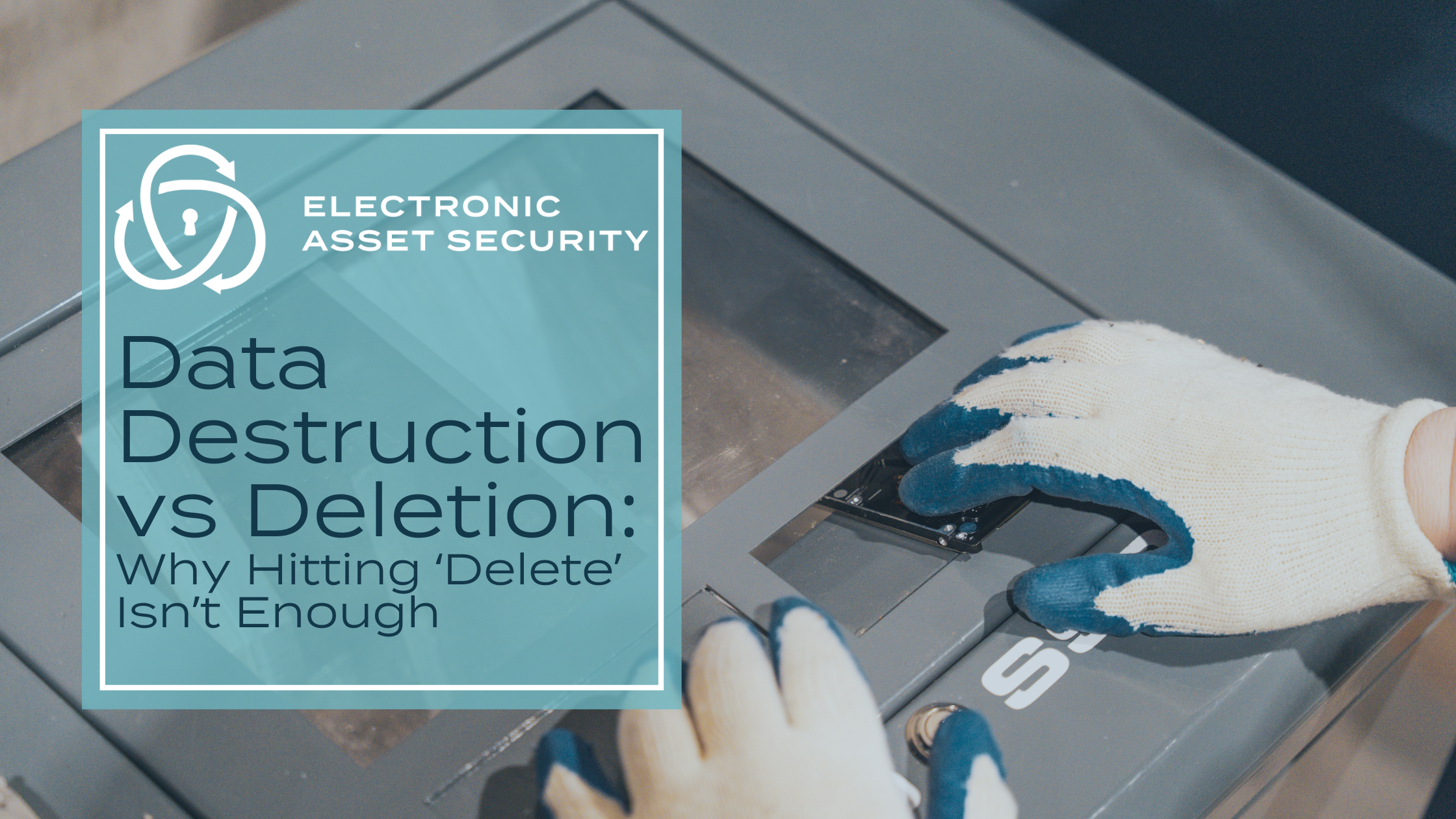
Most people assume that when they delete a file, it’s gone for good. But in the world of IT security and compliance, that assumption can be dangerous. Whether you’re an individual, a business, or a healthcare provider, understanding the difference between deleting and destroying data is key to protecting sensitive information…and your reputation.
What Happens When You Hit “Delete”?
When you delete a file, your operating system removes the pointer to that file, but the data itself remains on the drive until it’s overwritten. This means that with the right tools, even basic, free ones, deleted data can be easily recovered.
Formatting a drive may seem like the next logical step, but even that often fails to fully erase sensitive data. For organizations handling financial, personal, or medical records, that’s a huge liability.
What Is Data Destruction?
Data destruction refers to a process that makes data completely unreadable and unrecoverable. True data destruction goes beyond surface-level deletion and includes:
- Secure data wiping using NIST 800-88 compliant software
- Degaussing (for magnetic media)
- Physical destruction, such as shredding or crushing drives
The goal is simple: no one should be able to access your data again, no matter what tools they use.
Why This Matters
- Compliance Requirements: HIPAA, GDPR, FACTA, and other laws require specific methods for data disposal.
- Business Reputation: A single data breach tied to poor tech disposal can damage your customer trust.
- Legal Protection: Proper data destruction (with documentation) shields your business in the event of an audit or security incident.
Deletion Is Easy, But Not Enough
Too often, companies rely on internal staff to handle old devices with simple resets or free software tools. These shortcuts may save time, but they leave your business exposed.
Even seemingly secure tools like DBAN, or common physical methods like drilling holes in hard drives, may fall short of modern standards like NIST 800-88.
Why Work with a Certified Provider Like EAS?
At Electronic Asset Security (EAS), we don’t just delete, we destroy. As an R2v3-certified recycler and data destruction provider, we ensure every drive and device is processed securely and in full compliance with industry and legal standards.
You’ll get:
- Certified NIST 800-88 data destruction
- Secure pickup and chain-of-custody tracking
- Certificates of Destruction for every asset
- Environmentally responsible recycling
Don’t Risk It. Destroy It.
Deleting files might feel like enough, but in today’s world, it’s not. Choose full data destruction with EAS to truly protect what matters.
Learn more about our secure data destruction process at electronicassetsecurity.com.